Blog
How to Choose Natural Stone Slabs in Orange County: A Designer’s Guide
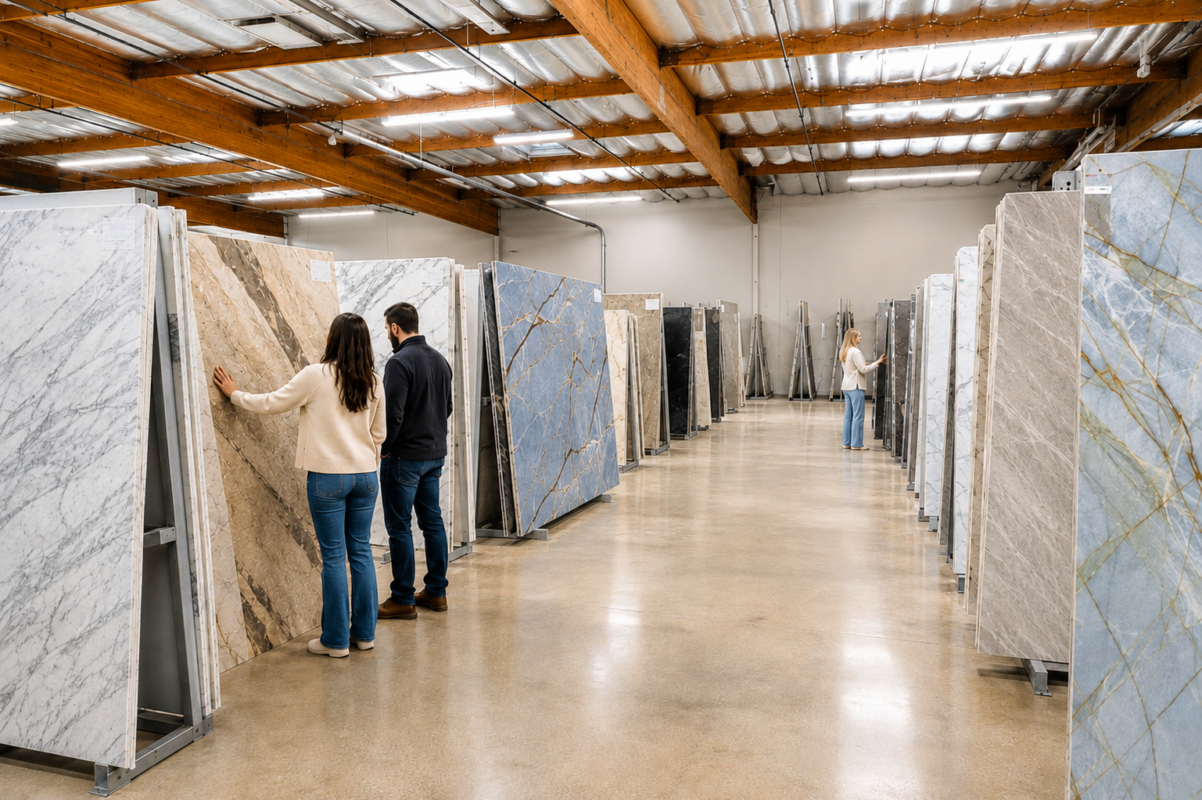
How to Choose Natural Stone Slabs in Orange County
What to know before visiting a slab yard, comparing quartzite, marble, and granite, and coordinating your final selection with a fabricator.
Choosing a natural stone slab is different from selecting a small tile or ordering a material from a sample. Every slab has its own movement, color variation, veining, and natural characteristics, so seeing the full piece can make a meaningful difference in the finished design.
For homeowners, designers, builders, and architects working in Orange County, a slab-yard visit is an opportunity to evaluate the material at full scale and make decisions about layout before fabrication begins. Trendy Surfaces offers natural stone slabs, including quartzite, marble, granite, and other materials, through its Orange County locations.
This guide covers the key differences between popular natural stones, what to bring to a showroom or slab yard, how to inspect slabs, and how to coordinate the selection with your fabricator so the final installation reflects the stone you chose.
Quartzite, Marble, or Granite: Which Natural Stone Is Right for Your Project?
The best material depends on more than appearance. Consider where the stone will be installed, how the surface will be used, the level of maintenance you are comfortable with, and the type of movement or color you want in the room.
Quartzite
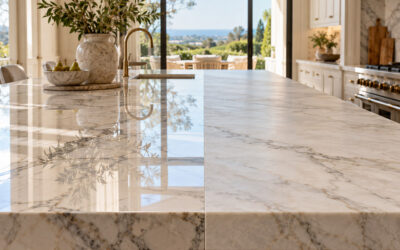
Quartzite is a natural metamorphic stone formed from sandstone under intense heat and pressure. It is valued for its hardness and durability, and many varieties feature flowing movement that can resemble marble.
It is a strong option for kitchen countertops, islands, feature walls, and other applications where clients want natural variation with good everyday performance. Care requirements can vary by stone, so sealing and maintenance should be discussed with the stone supplier and fabricator for the specific slab selected.
Marble
Marble is known for classic veining and a softer, refined appearance. Because it is more sensitive to acids and can etch or develop a patina with use, it is best chosen with an understanding of how the surface will age.
For many homeowners and designers, that natural evolution is part of marble’s appeal. It can be especially effective for statement islands, bathrooms, fireplaces, walls, and other areas where its visual character is the priority.
Granite
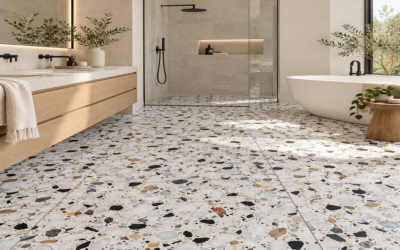
Granite offers a broad range of colors and patterns, from subtle mineral movement to bold, high-contrast designs. It is widely used for countertops because of its durability and heat resistance.
As with other natural stones, maintenance needs depend on the specific material and finish. Some stones benefit from sealing, while others may require less intervention, so the final care plan should be based on the selected slab rather than a one-size-fits-all schedule.
Quick Comparison of Popular Natural Stone Slabs
| Material | Typical Look | Performance & Care | Often Chosen For |
| Quartzite | Flowing or dramatic veining; many varieties have a marble-like appearance. | Very hard natural stone. Care and sealing needs vary by slab and finish. | Kitchen countertops, islands, feature walls, high-use surfaces. |
| Marble | Classic veining with a soft, elegant appearance. | Can etch and develop a patina; requires informed care. | Statement surfaces, bathrooms, fireplaces, feature areas. |
| Granite | Granular to sweeping patterns in a wide range of colors. | Durable and heat resistant; sealing needs vary. | Countertops, islands, bars, and other hard-working surfaces. |
Why Full-Slab Viewing Matters
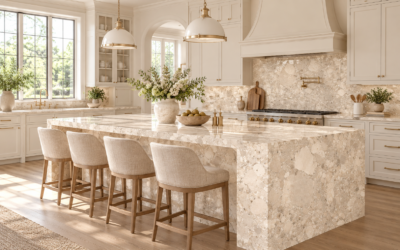
Small samples are useful for understanding color and finish, but they cannot show the full movement of a natural stone slab. A vein that looks subtle in a sample can become the defining feature of an island, and the direction of the pattern can influence where seams, sinks, cooktops, and waterfall edges should be placed.
Large-format slabs are particularly effective when the design calls for long, uninterrupted surfaces. Fewer seams can preserve the natural flow of the stone and make the material feel more intentional across an island, backsplash, fireplace, or feature wall.
No two natural stone slabs are exactly alike. When a project requires more than one slab, it is important to view the pieces together and confirm that their color, movement, and overall character work as a group.
How to Prepare for a Slab-Yard Visit
A little preparation makes a slab-yard visit much more productive. Before you arrive, have a general understanding of the project dimensions, the number of surfaces being covered, and any major cutouts such as sinks or cooktops. Your fabricator will ultimately create the final template, but approximate dimensions can help the showroom team guide the selection process.
Bring samples of the materials that will sit next to the stone whenever possible. Cabinet doors, flooring, tile, paint swatches, metal finishes, and hardware can all affect how a slab reads in the completed room. Natural and showroom lighting can also change the perceived warmth, depth, and contrast of the stone, so evaluating the slab alongside the project palette is valuable.
Slab Inspection Checklist
- Confirm the exact slab or slabs. Record identifying information and make sure the pieces you approve are the same pieces being reserved or purchased for the project.
- View multiple slabs together when needed. For projects requiring more than one slab, compare color, pattern, and movement across the group.
- Inspect natural characteristics. Look at fissures, pits, mineral variation, resin-filled areas, and other natural features so you understand what will be visible after fabrication.
- Think about the layout. Consider where major veins should appear and where sinks, cooktops, seams, outlets, or other cutouts may interrupt the pattern.
- Ask about consecutive slabs and bookmatching. If a mirrored or continuous effect is important, ask whether suitable slabs from the same bundle or block are available.
- Photograph the full slabs and labels. Clear photos create a useful reference for design discussions with the client and fabricator.
- Confirm quantity with the fabricator. Before the material is finalized, make sure the fabricator has reviewed the project requirements, slab dimensions, and expected yield.
Digital Visualization Can Support the Selection Process
High-resolution slab photography, digital inventory systems, and layout software can make it easier to evaluate a natural stone project before fabrication. Depending on the supplier and fabricator, digital tools may be used to review slab images, plan seam locations, compare vein direction, or preview how different sections of a slab could be used.
These tools are especially helpful for high-movement stones, waterfall islands, large backsplashes, and projects where several slabs need to relate to one another. They are best used as a supplement to physical inspection rather than a replacement for seeing the actual material whenever an in-person review is practical.
If you are working remotely, ask the showroom what photos, videos, measurements, or virtual viewing options are currently available for the slabs you are considering.
Coordinate the Stone Selection With Your Fabricator
The slab selection is only one part of a successful installation. A qualified stone fabricator is responsible for field measurements or templating, cutting, edge fabrication, seam planning, transport, and installation. Before material is finalized, the fabricator should confirm that the selected slabs are appropriate for the intended layout and that there is enough material for the project.
For high-movement stones, involve the fabricator early. The location of a seam or cutout can completely change the visual result. Sharing full-slab photographs and discussing priorities – for example, preserving a dramatic vein on the island or carrying movement through a waterfall edge – helps the fabricator understand the design intent.
Pricing and reservation procedures can vary by material, project, trade relationship, and current inventory. Ask the Trendy Surfaces team about current slab availability, hold or reservation procedures, and material pricing, and ask your fabricator for a separate estimate covering fabrication and installation.
Useful Terms to Know Before You Select a Slab
- Bundle / Block: Slabs cut from the same section of stone. Slabs from the same bundle may have more continuity in color and movement.
- Bookmatch: Two adjoining slabs arranged to create a mirrored pattern. Availability depends on how the slabs were cut and finished.
- Slab Hold / Reservation: A temporary hold on a specific slab while project details are being finalized. Availability and time limits vary, so confirm the current policy.
- Template: The precise field measurement used by the fabricator to determine the final shape and dimensions of the countertop or surface.
- Seam: The joint between two fabricated pieces. Seam location should be considered together with slab movement and structural requirements.
- Finish: The surface treatment of the stone, such as polished, honed, or leathered, which affects both appearance and maintenance.
- Fabrication: The process of cutting, shaping, edge finishing, and preparing the slabs for installation.
- Sealing: A treatment that can improve stain resistance on some natural stones. Whether it is recommended depends on the specific stone and application.
Visit Trendy Surfaces in Orange County
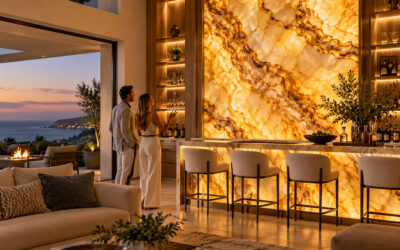
Seeing natural stone at full scale is one of the best ways to understand how it will perform visually in a finished space. Trendy Surfaces serves designers, builders, and homeowners through its Irvine Slabyard & Showroom and Laguna Niguel Design Center, with natural stone options that include quartzite, marble, granite, travertine, limestone, onyx, and more.
Whether you are selecting a statement quartzite island, classic marble, durable granite, or another natural stone, arrive with your project samples and approximate dimensions, take time to view the full slab, and involve your fabricator before the final material is committed.
To explore current slab inventory or plan a showroom visit, contact Trendy Surfaces for availability and project-specific guidance.
Frequently Asked Questions
Where can I shop for natural stone slabs in Orange County?
Look for a slab yard or showroom where you can view full slabs rather than relying only on small samples. Trendy Surfaces has an Irvine Slabyard & Showroom and a Laguna Niguel Design Center serving Orange County projects.
What is the difference between quartzite, marble, and granite?
Quartzite is a hard metamorphic stone often chosen for durability and flowing movement. Marble is prized for classic veining but is more sensitive to acids and can develop a patina. Granite is durable, heat resistant, and available in a wide range of colors and patterns.
What is the most durable natural stone for a countertop?
There is no single material that is best for every project, but quartzite and granite are both widely selected for durable countertop applications. Performance varies by the specific stone, finish, installation, and maintenance, so discuss the exact slab with your supplier and fabricator.
What should I bring when visiting a slab yard?
Bring cabinet, flooring, tile, paint, and hardware samples when possible, along with approximate project dimensions and photos of the space. If you are working with a designer or fabricator, bring any plans or layout information that can help evaluate scale and vein placement.
Can natural stone slabs be bookmatched?
Some slabs can be arranged to create a mirrored or continuous effect, especially when consecutive pieces are available. If bookmatching is important to the design, mention it early so the showroom and fabricator can evaluate suitable slabs.
Can I reserve a slab while I finalize the project?
Reservation and hold policies vary based on inventory and project circumstances. Ask the Trendy Surfaces team about the current procedure for the specific slabs you are considering.
How much do natural stone slabs cost?
Pricing depends on the type of stone, origin, rarity, slab size and thickness, finish, current inventory, and other material factors. Fabrication and installation are typically separate project costs. Request current material pricing from the showroom and a fabrication estimate from your fabricator.
Do all natural stone countertops need to be sealed?
Natural stone is commonly sealed to help reduce liquid absorption and improve stain resistance. Because porosity varies, the right sealer and resealing schedule depend on the specific stone, finish, and application. Follow the stone supplier’s and fabricator’s care recommendations. Sealer improves stain resistance but does not make stone stain-proof.