Blog
Luxury Kitchen Island Design: Choosing the Perfect Natural Stone
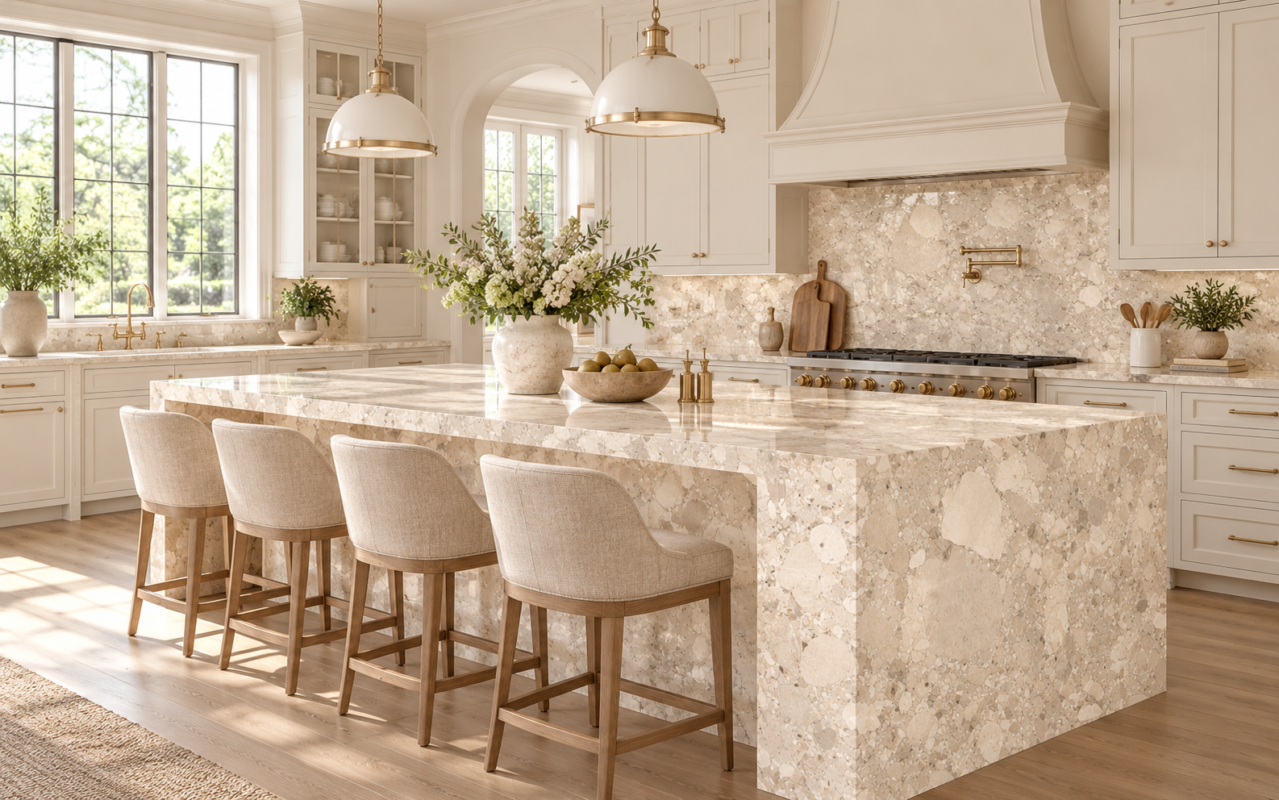
A natural stone kitchen island is both a functional work surface and a defining feature of a luxury kitchen. Whether your priority is the expressive veining of marble, the durability of granite, or the balance of beauty and performance offered by quartzite, the right slab can bring lasting character to the heart of your home.
This guide compares quartzite, granite, marble, and travertine; explores popular kitchen island details, including waterfall edges and bookmatched slabs; and explains how to choose and care for natural stone. Homeowners, architects, and designers can explore available materials at Trendy Surfaces’ Orange County showrooms in Irvine and Laguna Niguel.
Which Natural Stone Is Best for a Kitchen Island?
The best natural stone kitchen island material depends on how you use your kitchen, how much maintenance you prefer, and the visual effect you want. Quartzite and granite are often strong candidates for busy kitchens, while marble and travertine offer distinctive aesthetics with different care requirements. Performance varies by individual slab, finish, and stone composition.
| Stone | General performance | Care considerations | Visual character |
| Quartzite | High; varies by variety | Varies; periodic sealing may be needed | Dramatic movement and marble-like veining |
| Granite | High | Typically straightforward routine care | Granular patterns and diverse colors |
| Marble | More vulnerable to etching and scratches | More attentive cleaning and stain prevention | Classic veining and a developing patina |
| Travertine | Application dependent; softer than many granites | Sealing and attentive cleaning often needed | Warm tones and organic texture |
Tip: Ask your fabricator to confirm the suitability of your specific slab for island dimensions, edge profiles, supports, and daily use.
Quartzite Kitchen Islands: Natural Movement and Everyday Performance
Quartzite is a popular natural stone kitchen island choice for homeowners who want expressive, marble-like movement and a generally hard surface. Many genuine quartzites resist scratching better than marble; however, porosity and performance vary, so proper stone identification and material-specific care remain important.
When comparing quartzite vs. marble for islands, consider not only the slab’s appearance but also exposure to cooking spills, acids, heavy objects, and cleaning products.
Granite Kitchen Islands: A Durable Choice for Busy Kitchens
Granite is a familiar option for high-traffic kitchen islands because many varieties are hard-wearing and handle typical kitchen use well. Its natural patterns range from subtle mineral speckling to bold movement, giving designers flexibility across modern and traditional interiors.
Although granite is known for durability, it is not damage-proof. A fabricator should advise on heat exposure, sealing, and edge protection for the selected material. Use trivets and cutting boards to keep your surface looking its best.
Marble Kitchen Islands: Timeless Style With Thoughtful Care
Marble creates an elegant focal point through its distinctive veining and softer visual appearance. Classic options include Calacatta, Carrara, and Nero Marquina styles. Because marble is calcium-carbonate based, it can etch when exposed to acidic substances such as lemon juice or vinegar, even when sealed.
Others prefer to place marble on a statement island and select a more forgiving stone for high-use perimeter countertops. Neither approach is inherently better: the right choice depends on the desired appearance and willingness to maintain the surface.
Travertine Kitchen Islands: Warmth and Organic Texture
Travertine offers a naturally warm, textured appearance that suits Mediterranean, organic-modern, and understated interiors. For a kitchen island, review the stone’s fill, finish, density, and protection requirements with a qualified fabricator. Not every travertine product is appropriate for every countertop application.
Luxury Kitchen Island Design Trends for 2026
For projects inspired by luxury kitchen island trends in 2026, designers are exploring expansive slab surfaces, sculptural profiles, rich natural movement, and tactile finishes. These details can be adapted to a range of kitchen sizes and design styles.
Waterfall Stone Island Design
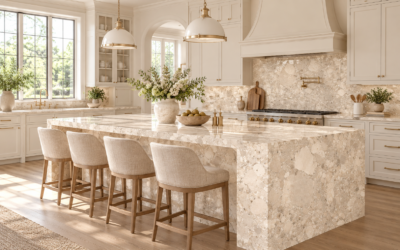
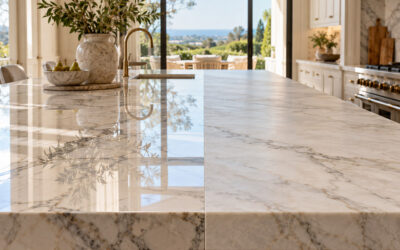
A waterfall island carries the countertop material vertically down one or both ends of the island. Aligning the veining across the top and side panels creates a cohesive visual statement and makes the stone a central design feature.
Bookmatched Slabs and Seam Planning
Bookmatching places two neighboring slab faces in a mirrored arrangement, producing a symmetrical pattern. It can be dramatic on a large island or adjacent feature surface. Ask about slab size, vein alignment, yield, and seam placement early: large-format slabs can reduce seams in some designs, but a seamless result is not always possible.
Mitered Edge Stone Countertops
A mitered edge joins carefully cut stone pieces to create the look of a thicker slab. This can give an island a monolithic, substantial appearance without using a solid block of stone. Precise fabrication and appropriate support are essential.
Honed vs. Polished Natural Stone
A polished finish reflects more light and emphasizes color depth; a honed finish offers a softer, low-sheen appearance. Neither finish is universally easier to maintain. Discuss how each interacts with fingerprints, staining, etching visibility, and your specific stone.
Integrated Stone Sinks
An integrated stone sink can visually connect with the island or surrounding countertops. Because stone sinks present special challenges with joints, drainage, waterproofing, cleaning, and support, discuss feasibility and maintenance with an experienced fabricator before specifying one.
How to Select a Natural Stone Slab for Your Kitchen Island
- View the actual slab, not just a small sample. Natural veining, color, and movement vary from piece to piece.
- Confirm the island dimensions, overhang, seam location, and required structural support with the fabricator.
- Review available finishes, edge profiles, and any bookmatching requirements before fabrication.
- Discuss the stone’s porosity, stain susceptibility, and realistic maintenance routine.
- Verify slab availability, thickness, and total material yield before making a final selection.
At Trendy Surfaces, our Orange County team can help you compare the visual characteristics of natural stone and explore available slab options. Fabrication, installation, and final technical specifications should be confirmed by the professionals performing the work.
Natural Stone Kitchen Island Care and Maintenance
Regular, material-appropriate care helps preserve the appearance of a natural stone kitchen island. The Natural Stone Institute recommends using cleaning approaches appropriate to the specific stone type; avoid assuming the same products work for every surface.
- Wipe up spills promptly, especially acidic liquids on marble and other acid-sensitive stones.
- Use a soft cloth and a stone-safe, pH-neutral cleaner when recommended by your stone supplier.
- Protect surfaces with cutting boards and trivets rather than treating any stone as scratch-proof or heat-proof.
- Check whether the selected slab needs sealing. The appropriate sealer and resealing interval depend on the stone, finish, exposure, and manufacturer or fabricator guidance.
A water-drop observation may suggest changes in water absorption, but it does not establish a universal annual sealing schedule. Follow the stone and sealer manufacturer’s instructions when deciding whether to reseal.
Explore Natural Stone Kitchen Island Slabs in Orange County
The ideal kitchen island should suit your home’s design and the way you live. Visit Trendy Surfaces in Irvine or Laguna Niguel to explore quartzite, granite, marble, and other natural stone surfaces. Our team can help you compare colors, movement, and finishes as you plan your next residential or commercial project.
Contact Trendy Surfaces to ask about current slab availability or schedule a showroom visit.
Frequently Asked Questions
What is the best natural stone for a kitchen island in 2026?
Quartzite and granite are strong candidates for active kitchens because many varieties are durable. Marble is preferred by homeowners seeking classic veining who are comfortable with additional care. The best choice depends on slab characteristics, use, and maintenance preferences.
What kitchen island designs are popular in 2026?
Oversized islands, waterfall edges, mitered profiles, bookmatched natural stone, and honed or textured finishes are prominent design directions. Choose features that suit the kitchen layout and the properties of your chosen slab.
Is quartzite replacing granite and marble for kitchen islands?
Quartzite is an appealing alternative for some projects, particularly when homeowners want natural veining with good surface hardness. It does not make granite or marble obsolete; each offers distinctive performance and design benefits.
Is quartzite or marble better for everyday kitchen use?
Many genuine quartzites offer greater scratch and acid resistance than marble, making them attractive for daily use. Marble remains popular for its appearance but is more susceptible to acidic etching. Always assess the specific slab.
Is quartzite more durable than granite?
Both can be durable kitchen island materials, but performance varies across individual stones. Do not assume every quartzite exceeds every granite in hardness, porosity, or stain resistance.
Which natural stone is good for pastry preparation?
Marble is traditionally popular for pastry work because a cool stone surface can be useful when handling dough. Actual surface temperature depends on room conditions, so it is not a substitute for temperature control.
How often does a natural stone island need sealing?
There is no single schedule for every stone. Some slabs require periodic sealing while others may need less frequent treatment. Follow the fabricator’s recommendations and the sealer manufacturer’s directions.
Does a natural stone kitchen island increase home value?
A well-designed natural stone island can strengthen a kitchen’s visual appeal and may appeal to buyers. However, the effect on resale value depends on the local market, overall renovation quality, cost, and buyer preferences; a specific increase cannot be guaranteed.