Blog
Honed vs. Polished Stone: Which Finish Suits Your Home?
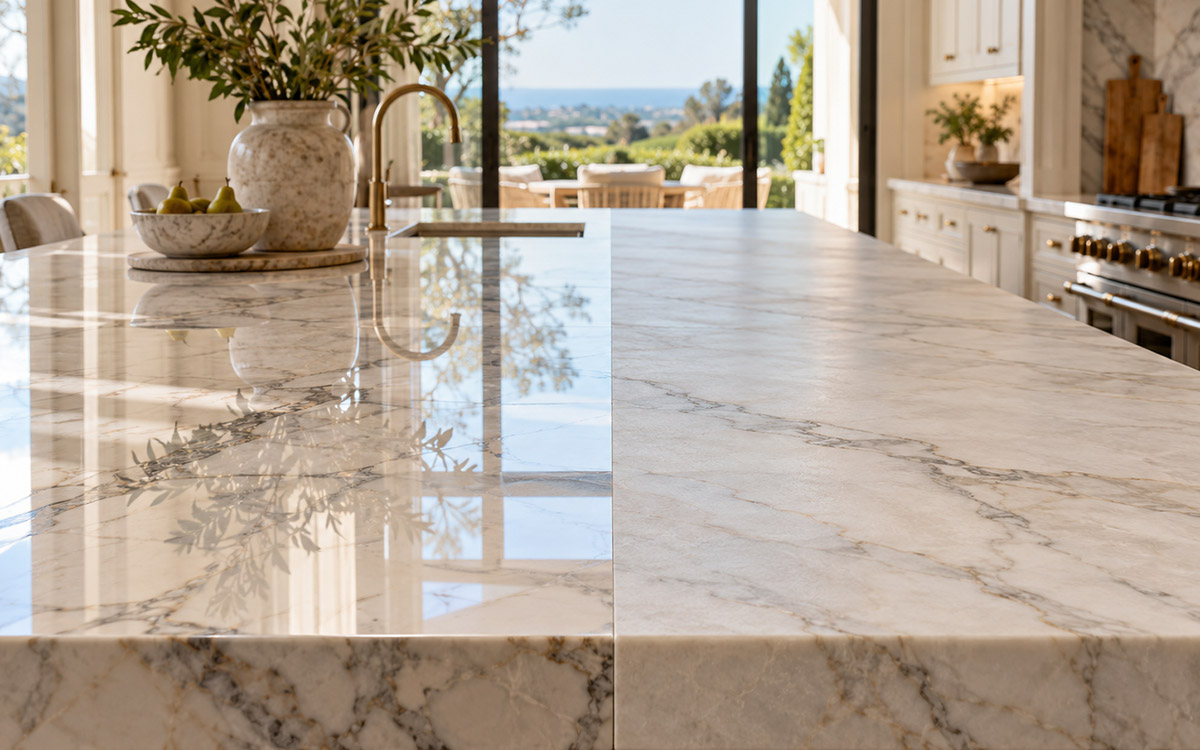
How each finish changes slip resistance, etch visibility, and light in your kitchen or bath, from marble counters to shower floors.
Picture two slabs of the same marble standing side by side. One is glossy and full of reflected light. The other is soft, calm, and almost velvety. When you’re comparing natural stone slabs Orange County homeowners love, the finish is often the moment the real decision begins. The finish you choose changes how the stone looks, how it feels underfoot, and how it ages with daily life. At Trendy Surfaces, you can see both finishes next to each other at our Irvine slab yard and Laguna Niguel design center. This guide walks through the trade-offs room by room, so you can choose with confidence.
Key Takeaways
- A polished finish is ground and buffed to a mirror shine that deepens color and veining, while a honed finish stops earlier for a smooth, satin-to-matte look.
- Etch marks from lemon, wine, or tomato on marble and other calcium-based stones are much harder to spot on honed surfaces than on polished ones.
- Honed and textured finishes generally offer more grip than polished stone, which is why they are the usual pick for bathroom and kitchen floors.
- Polished stone tends to resist staining better because its surface is tighter, while honed stone is more porous and needs more regular sealing.
- Leathered and brushed finishes add soft texture that hides fingerprints and water spots, making them a strong middle ground for busy kitchens.
What Is the Difference Between Honed and Polished Stone?
Both finishes start the same way: the stone is ground flat with abrasive pads. A polished finish keeps going with finer and finer pads until the surface shines like glass. A honed finish stops before that last buffing stage, leaving a flat, smooth surface with little or no shine.
How a Polished Finish Is Made (and Why It Looks Deeper)
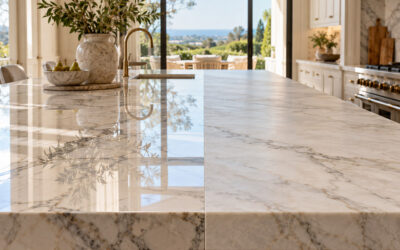
Polishing works through a series of grits, which are abrasive pads that become finer at each step. Each pass removes smaller scratches until the surface is tight enough to reflect light like a mirror. That reflection saturates the color, so veining looks sharper and dark stones look richer.
How a Honed Finish Is Made
“Honed” simply means the stone was smoothed but not buffed to a shine. The result is satin to matte, and it feels silky to the touch. One thing to know before you fall for a dark slab: as MSI notes in its finish comparison, honing can make deep-colored stone read lighter or a little grayer than its polished twin.
How Finish Changes Etching and Stains on Natural Stone Slabs in Orange County Kitchens
Etching is a chemical reaction, not a stain. Acids like lemon juice, wine, or tomato sauce react with the calcium carbonate in marble, limestone, travertine, and onyx, leaving a permanent dull mark. On polished stone those marks catch the light. On honed stone, the etching blends into the matte surface.
Etching vs. Staining: Two Different Problems
A stain happens when a liquid soaks into the stone and leaves color behind. An etch is surface damage from acid. According to Houzz’s guide to caring for marble, polished marble resists stains better but shows etching clearly, while honed marble hides etching well but absorbs stains more easily. So each finish trades one weakness for the other.
On honed marble, the stone is already matte, so a new etch mark has nowhere to stand out.
Why Kitchen Islands Show Etching First
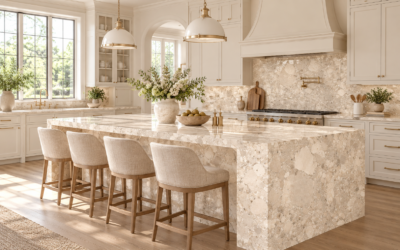
Islands sit in the middle of the room, catch light from every window, and have no backsplash to break up the view. They also host the cutting boards, cocktails, and fruit bowls. If you love marble slabs for an island, a honed finish is often the more forgiving choice.
Stones Where This Matters Less
Granite and dolomite are generally far less sensitive to acid than marble or limestone. Even so, stones vary from quarry to quarry. A simple test helps: ask Trendy Surfaces for a sample, set a slice of lemon on it for a few minutes, and see what happens.
Slip Resistance: Which Finish Is Safer for Floors and Showers?
Polished stone can turn slick when it gets wet, so most designers avoid it on bathroom floors and showers. Honed and textured finishes add grip underfoot. They are the usual pick for wet areas, though the stone itself, the tile size, and upkeep all play a part too.
What DCOF and ANSI A326.3 Mean for Homeowners
DCOF stands for dynamic coefficient of friction. In everyday words, it measures how much grip a floor gives you while you’re walking on it. The Tile Council of North America explains that ANSI A326.3 is the standard test method for measuring it on solid surface flooring, and it includes use classifications for different spaces.
As Crossville outlines, the common baseline is a wet DCOF of 0.42 or higher for level indoor floors that are walked on when wet. Shower floors and other spots with standing water fall into a stricter class called Interior Wet Plus. Because the standard was built for hard flooring in general, the Natural Stone Institute tested more than 300 stone specimens in six finishes to see how well it applies to natural stone.
Wet Zones: Showers, Bath Floors, and the Kitchen Sink
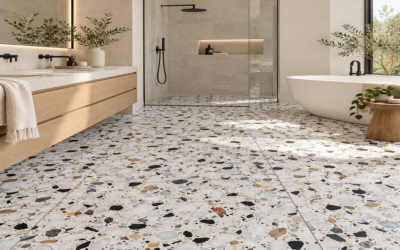
For shower floors and bathroom floors, honed or textured finishes are the safer starting point. Small mosaics help too, since the extra grout lines add more grip. Ask for product DCOF data where it is available, and remember that a rating is only one factor alongside traffic and maintenance.
Where Polished Floors Still Work
Polished stone still shines in dry entries, formal dining rooms, and other low-water areas. Limestone.com points out that wet stone floors carry the highest slip risk and that anti-slip treatments can add some grip while keeping the shine. No finish or treatment makes a floor slip-proof, so plan rugs and mats where water lands.
Light, Color, and Style: How Each Finish Shapes a Room
Polished: Glamour and Brightness
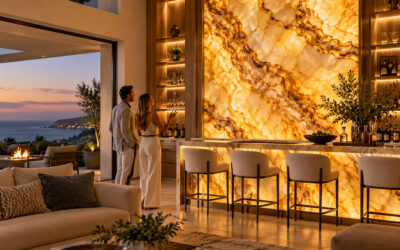
A polished surface bounces light around the room and makes veining pop. It suits contemporary, glam, and Art Deco spaces, and it is the classic choice for backlit onyx features. In a small bath, polished walls can help the room feel brighter and larger.
Honed: Quiet, Organic, and Coastal
Honed stone feels soft and lived-in. It fits the relaxed coastal and Mediterranean homes found across Orange County, where natural light does the work. Our coastal design guide shows how matte surfaces pair with linen, white oak, and ocean tones.
Mixing Finishes in One Project
You don’t have to pick only one. A polished wall slab with a honed floor in the same stone keeps the look cohesive while giving you safer footing. It is a pairing worth seeing in person at Trendy Surfaces, especially for primary baths.
Beyond Honed and Polished: Leathered and Brushed Finishes
A leathered finish is made by running diamond brushes over the stone, creating a soft, textured surface with a gentle sheen. It keeps color richer than honed and hides fingerprints, smudges, and water spots. A brushed finish is similar and is often used on limestone and travertine for an aged feel.
Leathered Stone for Busy Kitchens
Leathered granite and marble hide crumbs, smudges, and water spots well. MSI also notes that leathered surfaces tend to resist stains better than honed ones. The trade-off is repair: a damaged spot can be difficult to match, so a larger area may need refinishing.
Brushed and Textured Finishes for Floors
Brushed stone has a slightly worn, tactile feel that adds grip and develops a pleasing patina over time. Honed and brushed travertine works beautifully for kitchen floors, mudrooms, and spaces that open to a patio.
Choosing Natural Stone Slabs in Orange County: A Room-by-Room Finish Guide
Every room asks something different of a stone surface. Counters face acids and hot pans, floors face water and foot traffic, and walls mostly just need to look beautiful. Here is a quick way to match the finish to the job.
Kitchen Countertops and Islands
If you cook often and want low worry, polished granite slabs or polished dolomite are both reliable choices. If you love marble and can accept a patina, honed or leathered marble will age gracefully.
Bathroom Vanities and Walls
Polished stone works well here. Walls carry no slip risk, and vanity tops see fewer acidic spills than kitchen counters.
Bathroom Floors and Showers
Choose honed or textured stone, or a mosaic with plenty of grout lines. For a lower-maintenance option with a stone look, porcelain slabs are worth considering.
Kitchen Floors
Honed or brushed limestone and travertine balance comfort, grip, and warmth in a busy kitchen.
Care and Maintenance by Finish
Daily Care That Works on Both Finishes
Wipe spills quickly, especially anything acidic. Houzz recommends warm water with a mild soap and a soft cloth and suggests skipping vinegar, lemon, bleach, and harsh bath cleaners. Squeegee shower walls after use and set pads under serving pieces.
Sealing Schedules
A sealer is a clear treatment that slows down how fast liquids soak in. Honed stone is more porous, so MSI suggests resealing it at least once a year, sometimes more. Polished stone usually needs it less often, though every stone is different.
The right finish is the one that matches how you actually live in the room.
Can You Change the Finish Later?
Yes, in many cases. A stone restoration pro can hone a polished surface in place. Going from honed back to polished is possible but more involved. Light etching can sometimes be buffed out, while deeper marks may need re-honing.
Seeing Natural Stone Slabs in Orange County in Person
Polished stone brings shine and better stain resistance. Honed stone hides etching and adds grip. Leathered sits in the forgiving middle. The best way to decide is to see samples in real light and try the lemon test at home. For more help comparing slabs, read our guide on how to choose natural stone slabs.
Material availability, pricing, and lead times vary by project and are confirmed in-showroom or by quote.
Ready to see these finishes in person? The team at Trendy Surfaces has been helping Orange County homeowners, designers, and contractors find the right tile, stone, and flooring for their projects, and our Irvine slab yard is the best place to compare honed and polished slabs side by side.
Visit the Irvine Slabyard & Showroom at 17912 Cowan, Unit C, Irvine, CA 92614, or call (714) 284-0118. Or stop by the Laguna Niguel Design Center at 23811 Aliso Creek Road, Ste 176, Laguna Niguel, CA 92677, or call (949) 446-8121.
Frequently Asked Questions
Is honed or polished marble better for a kitchen countertop?
It depends on what bothers you more. Polished marble resists stains better but shows etch marks from acidic foods clearly. Honed marble hides etching well but is more porous, so it needs more regular sealing and quick cleanup of spills.
Are polished stone floors too slippery for a bathroom?
Polished stone can be slick when wet, so it is not usually the first choice for bathroom floors or showers. Honed, textured, or small mosaic stone offers more grip. Ask for product slip-resistance (DCOF) data where available, and use mats where water collects.
Does honed stone stain more easily than polished stone?
Generally, yes. Honing leaves a more open surface that absorbs liquids faster than a tight polished face. Regular sealing and prompt wiping of spills help keep honed stone looking its best.
Can a polished stone countertop be honed later?
In many cases, yes. A stone restoration professional can hone a polished surface in place to reduce shine and soften the look of etch marks. Results depend on the stone, so ask the pro to test a small area first.
What is a leathered stone finish, and how does it compare to honed?
A leathered finish is created with diamond brushes that give the stone a soft, textured feel and a gentle sheen. Compared with honed stone, it usually keeps richer color, hides fingerprints and water spots better, and resists stains a bit more. Repairs can be harder to blend, so damaged spots may need a wider refinish.