Blog
Wall Cladding Ideas That Turn a Feature Wall Into Art

A textured wall does more for a room than another coat of paint ever will.
Paint changes a room’s color. Wall cladding changes how it feels. Large-format porcelain panels, natural stone veneer, and mosaic accents are showing up on more fireplace walls, entryways, and kitchen backsplashes across Orange County, giving flat drywall real texture and depth. At Trendy Surfaces, homeowners and designers increasingly come into the Irvine and Laguna Niguel showrooms looking for a material that does more than sit in the background.
Key Takeaways
- Wall cladding covers a range of materials, including large-format porcelain panels, natural stone veneer, and mosaic tile, each suited to different rooms and budgets.
- Design trends are moving toward textured, natural stone looks in warm tones like travertine and limestone.
- Porcelain panels are lighter and easier to maintain than natural stone veneer, while stone provides a more unique texture.
- Wet areas like showers and backsplashes need materials rated for moisture; not every cladding option is suited to those spaces.
- Cladding costs vary widely by material and wall size, so a showroom consultation is the most accurate way to budget a feature wall.
What Counts as Wall Cladding?
Wall cladding refers to any material applied to a wall’s surface for decorative or protective effect, distinct from paint or wallpaper because it adds physical texture and dimension. In a tile and stone showroom, that usually means large-format porcelain panels, natural stone veneer or ledger panels, or mosaic tile used across a full wall rather than a small accent.
The appeal is straightforward: cladding provides a wall with genuine depth and material presence, something a flat painted surface cannot replicate no matter the color chosen.
Why Wall Cladding Is Having a Moment
Interior design is moving away from flat, uniform surfaces toward materials that add warmth and organic character, and wall cladding is a direct response to that shift. Textured, natural stone aesthetics, particularly in cream and taupe tones like travertine and limestone, are showing up frequently in current design work because they create a calm, grounded feel that flat paint cannot.
That shift is also practical. A cladded wall, whether stone or porcelain, tends to photograph and show better in person than a painted one, which is relevant for homeowners planning to sell or simply wanting a space that feels considered rather than default.
A cladded wall has weight and shadow that paint can only fake with lighting.
Porcelain Panels vs. Natural Stone Veneer: Which to Choose
Large-format porcelain panels are lighter, more consistent in color, and generally lower maintenance than natural stone veneer, while natural stone offers authentic texture and one-of-a-kind veining that porcelain can only approximate. Porcelain tends to be the practical choice for larger walls or DIY-adjacent projects, while natural stone suits homeowners prioritizing a genuinely unique, textured look and willing to invest in professional installation.
Both options are available as porcelain slabs cut to size for wall applications, which makes it easier to compare the two side by side before committing to either one.
Where Wall Cladding Works Best in a Home
Fireplace walls are the most common starting point, since cladding a fireplace surround in stone or large-format porcelain instantly becomes the visual anchor of a living room. Entryways are another natural fit, giving a home a strong first impression the moment someone walks in.
Kitchens and bathrooms also benefit from cladding beyond the standard backsplash: a full wall behind open shelving, a shower wall clad floor to ceiling, or a powder room feature wall are all ways to use the material in a smaller, contained space where the investment goes further. A mosaic accent strip within a larger cladded wall is another way to add detail without covering an entire room in the more expensive material.
Installation Considerations: Weight, Substrate, and Wet Areas
Natural stone veneer is heavier than porcelain panels and generally requires a substrate built to support that weight, as well as professional installation to manage that load safely. Large-format porcelain panels are lighter and thinner, making them easier to install over existing surfaces, though professional installation is still recommended given the size and handling required for large sheets.
For wet areas like shower walls, confirm the specific product is rated for that use. Not every decorative cladding material is intended for constant water exposure, even if it looks similar to one that is.
Design Pairings: Colors, Textures, and Lighting
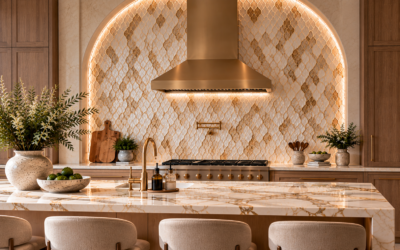
Warm, neutral stone tones like travertine and limestone pair naturally with matte black or brushed brass fixtures, wood accents, and simple, uncluttered furniture, letting the wall’s texture do most of the visual work. Cooler stone tones or a more graphic porcelain pattern tend to suit a more modern, minimalist room instead.
Lighting matters more with cladding than with a painted wall, since texture depends on shadow. A wall wash or accent lighting placed to graze across the surface will show off the material’s depth far more than flat, even lighting from overhead.
Budgeting for a Feature Wall
Cladding costs depend heavily on the material chosen, with porcelain panels generally landing below natural stone veneer once labor is factored in, similar to the cost pattern seen with slabs and pavers. Wall size, material thickness, and the complexity of the installation (a simple flat wall versus a fireplace with returns and a mantel) all affect the final price.
Because pricing varies so much by product and project, the most accurate way to budget a feature wall is an in-person consultation, where a specific porcelain or stone option can be quoted against the actual wall dimensions. For more on where these materials are trending, see our related post on top tile and surface trends.
Ready to see wall cladding options in person? The team at Trendy Surfaces has been helping Orange County homeowners, designers, and contractors find the right tile, stone, and flooring for their projects.
Visit the Irvine Slabyard & Showroom at 17912 Cowan, Unit C, Irvine, CA 92614, or call (714) 284-0118. Or stop by the Laguna Niguel Design Center at 23811 Aliso Creek Road, Ste. 176, Laguna Niguel, CA 92677, or call (949) 446-8121. Material availability, pricing, and lead times vary by project and are confirmed in the showroom or by quote.
FAQ
What is the difference between wall cladding and a backsplash?
A backsplash is typically a smaller, functional area behind a counter or sink, while wall cladding usually covers a larger portion of a wall, such as a full fireplace surround or an entryway, primarily for visual impact.
Is porcelain or natural stone better for wall cladding?
Porcelain panels are lighter, more consistent, and generally lower maintenance, while natural stone veneer offers more authentic texture and unique variation. The right choice depends on budget, wall size, and how much upkeep you want to take on.
Can wall cladding be used in a shower?
Some porcelain and natural stone cladding is rated for wet areas like showers, but not all decorative cladding is. Confirm the specific product’s moisture rating before using it anywhere with constant water exposure.
Is wall cladding heavy? Will it need extra wall support?
Natural stone veneer is heavier and often needs a substrate built to support it, while large-format porcelain panels are lighter and generally easier to install over existing surfaces, though both benefit from professional installation.
How much does a cladded feature wall cost?
Cost depends on the material, wall size, and installation complexity, with porcelain panels generally costing less than natural stone veneer once labor is included. An in-showroom quote against your actual wall dimensions is the most accurate way to budget.