Blog
The Role of Tile in Creating a Luxury Bathroom Design

From expansive porcelain surfaces to intricate mosaics, tile helps define the atmosphere, durability, and visual sophistication of a truly luxurious bathroom.
A luxury bathroom is more than a practical room with attractive finishes. It is a carefully designed environment that creates a sense of calm, comfort, and refinement. Every surface contributes to the experience, but tile often plays the most significant role because it covers such a large portion of the space. Floors, shower walls, tub surrounds, niches, backsplashes, and feature walls all depend on tile to establish the bathroom’s visual identity.
The right tile can make an ordinary bathroom feel like a private retreat. Large-format porcelain can create clean, uninterrupted surfaces. Marble-look tile can introduce elegant veining and movement. Mosaics can add detail and craftsmanship, while textured wall tile can interact with light to create depth. Even a restrained neutral palette can feel luxurious when you thoughtfully coordinate the materials, scale, layout, and installation.
Luxury does not necessarily require the most expensive product in a showroom. It comes from selecting materials that work together, using them in appropriate proportions, and paying close attention to details such as grout color, edge finishing, pattern alignment, lighting, and transitions. Tile provides the foundation for all of these choices.
When homeowners approach tile as an architectural design element rather than a simple wall or floor covering, they can create a bathroom that feels polished, cohesive, and distinctly personal.
Tile Establishes the Bathroom’s Overall Design Direction
Bathrooms contain many individual components, including the vanity, bathtub, shower enclosure, mirrors, lighting, hardware, and plumbing fixtures. Tile helps connect these elements by creating a visual backdrop that establishes the room’s color palette, texture, and overall mood.
A luxury bathroom may begin with a dramatic marble-inspired porcelain tile featuring bold veining. That surface can influence the selection of cabinetry, countertop materials, metal finishes, and wall colors. In another design, a warm limestone-look tile may create a quiet, spa-like foundation that supports natural wood, soft lighting, and understated fixtures.
Because tile occupies so much visual space, it often determines whether the room feels contemporary, traditional, organic, glamorous, or minimalist. Large gray porcelain tile can support a clean modern aesthetic, while creamy stone-look tile creates warmth and softness. Glossy decorative tile may bring a more polished and expressive appearance, whereas matte surfaces tend to feel calm and architectural.
Color is important, but it is only one part of the design. The final effect is influenced by the scale of the tile, the direction of the layout, the amount of grout, and the surface finish. A simple white tile can appear classic when installed in a traditional offset pattern, contemporary when stacked vertically, or highly refined when selected in an oversized format with narrow grout joints.
Luxury bathrooms often benefit from a limited material palette. Rather than introducing many unrelated tiles, designers may use one primary surface in several sizes or formats. A large-format tile might cover the floor and shower walls, while a coordinating mosaic appears on the shower floor or inside a niche. This approach creates variety without disrupting the room’s visual continuity.
“Luxury bathroom design is often defined by restraint, consistency, and the thoughtful repetition of a few exceptional materials.”
Tile allows homeowners to establish this consistency across multiple surfaces. When carefully selected, it becomes the element that brings every part of the room together.
Large-Format Tile Creates a Clean and Expansive Appearance
Large-format tile has become a defining feature in many luxury bathrooms because it reduces the number of visible grout lines and creates a more continuous surface. This cleaner appearance can make the room feel larger, calmer, and more architecturally sophisticated.
On shower walls, oversized porcelain tile can recreate the appearance of natural stone slabs. Marble-look designs with broad veining can create dramatic movement across the enclosure, while subtle concrete or limestone finishes provide a quieter, spa-inspired effect. Fewer grout joints allow the printed or textured surface to become the main visual focus.
Large-format floor tile can also make a bathroom appear more expansive. Small tiles create many visual divisions, while larger pieces produce broader areas of uninterrupted color and texture. This can be especially effective in open primary bathrooms where the flooring extends from the vanity area into the shower.
The use of large-format tile does not mean every surface must look identical. Designers can vary the orientation to create distinction. A rectangular tile might be installed horizontally on the main walls and vertically inside the shower. A coordinating mosaic can introduce a change in scale while maintaining the same color family.
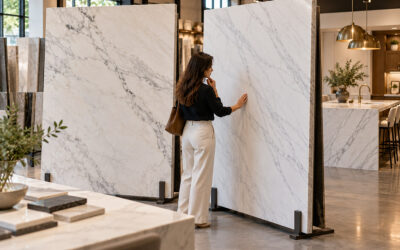
Porcelain slabs take this concept further by covering walls with very few seams. They can be used behind a bathtub, around a fireplace in an adjoining suite, or across the walls of a large shower. When the veining and pattern placement are done just right, the visual effect can be similar to carved stone architecture.
Book-matched or vein-matched layouts can add another level of sophistication. In these installations, adjacent tiles or slabs are positioned so the pattern flows intentionally across the wall. This requires advance planning, additional material, and an experienced installer, but the result can become a striking focal point.
Large-format tile requires technically precise installation. The substrate must be extremely flat, and the tiles may need specialized cutting, handling, and leveling systems. Poor installation can result in uneven edges, visible lippage, or awkward cuts that reduce the sense of luxury.
The room’s dimensions should also guide the layout. Large tile does not automatically make every bathroom look better. The installer should determine where cuts will fall around corners, vanities, drains, windows, and plumbing fixtures. Balanced placement is essential because poorly positioned narrow cuts can make even premium tile appear less refined.
When the material and installation are appropriate, large-format tile can give a bathroom the clean, expansive appearance associated with high-end hotels, spas, and custom residences.
Mosaics and Decorative Tile Add Craftsmanship and Detail
While large-format tile creates visual calm, mosaics and decorative tile introduce detail, texture, and craftsmanship. These smaller-scale materials are often used to highlight specific areas without overwhelming the bathroom.
A mosaic shower floor can be both functional and decorative. Smaller pieces can follow the slope toward the drain more easily than large tile, while the additional grout joints may provide better traction. The mosaic may coordinate closely with the wall tile or introduce a contrasting shape, material, or color.
Shower niches are another ideal location for detailed tile. A mosaic or patterned tile inside the niche can create a subtle focal point and make a practical storage area feel intentionally designed. The surrounding wall tile can remain simple, allowing the niche to stand out without dominating the room.
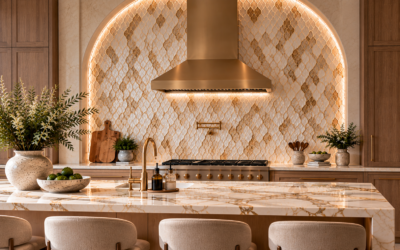
Decorative tile may also be used behind a vanity, around a mirror, or on the wall behind a freestanding bathtub. These areas naturally attract attention and can support a more expressive surface. Fluted ceramic, glass mosaic, geometric porcelain, or carved stone can bring visual movement to an otherwise quiet interior.
Borders and insets can add a tailored quality when used carefully. A narrow mosaic band may define the shower walls, frame a feature panel, or connect the colors of the floor and vanity. However, luxury design typically avoids excessive decorative breaks. One carefully positioned detail often feels more sophisticated than several competing accents.
Material variation can further elevate the space. Stone mosaics may contain natural veining and tonal changes. Glass can reflect light and add luminosity. Metallic details introduce glamour, while handcrafted ceramic brings subtle irregularity and warmth.
Textured tile is particularly effective when paired with directional lighting. Wall sconces, recessed fixtures, or concealed lighting can cast shadows across fluted or dimensional surfaces. This interplay between light and texture creates depth that changes throughout the day.
“Small areas of detailed tile can have an outsized impact when they are placed where the eye naturally pauses.”
The goal is not to fill every surface with decoration. Instead, mosaics and decorative tile should enhance the room’s focal points and create moments of visual interest within a calm overall composition.
Natural-Looking Surfaces Bring Warmth and Sophistication
Luxury bathrooms often draw inspiration from nature. Stone, wood, water, and organic textures contribute to the sense of relaxation associated with spa environments. Tile can recreate these materials while providing the durability needed in a wet room.
Marble-look porcelain remains popular because it offers dramatic or subtle veining without requiring the same maintenance as many natural stones. Some collections reproduce bright white marble with gray movement, while others feature warm cream, gold, brown, or charcoal veining. The range allows homeowners to select a look that feels glamorous, understated, modern, or traditional.
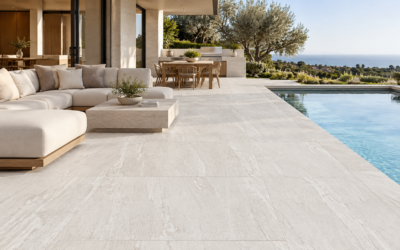
Limestone- and travertine-look porcelain create a softer effect. Their gentle tonal variation and warm neutral colors can make the bathroom feel grounded and serene. These surfaces pair particularly well with natural wood vanities, brushed metal fixtures, linen textures, and warm lighting.
Wood-look porcelain can introduce the appearance of timber in locations where real wood may be impractical. It may be used on floors, feature walls, or even shower surfaces when the product is approved for the application. The visual warmth of wood can help balance the harder materials typically found in bathrooms.
Concrete-look tile supports a more minimalist or contemporary aesthetic. Its subtle variation creates interest without obvious pattern, making it an effective background for sculptural tubs, floating vanities, matte black fixtures, or integrated lighting.
Homeowners who prefer genuine natural stone can use marble, limestone, travertine, slate, or other materials, provided they understand the maintenance requirements. Natural stone may need sealing, specialized cleaning, and additional care in wet areas. It can offer unique character because no two pieces are exactly alike, but the variation should be reviewed before installation.
Porcelain offers greater consistency and often easier maintenance, while natural stone provides authentic depth and individuality. Neither option is automatically more luxurious. The best choice depends on the desired appearance, budget, maintenance expectations, and technical requirements.
A sophisticated bathroom may also combine materials. Stone-look porcelain could cover the main surfaces, while a genuine stone mosaic adds detail. Wood-look tile might appear on one wall against a neutral porcelain floor. These combinations can create depth when the colors and textures are carefully coordinated.
The objective is to build a material palette that feels natural and cohesive rather than artificial or overly decorative.
Lighting and Tile Work Together to Create Atmosphere
Tile is not experienced in isolation. Its appearance changes significantly depending on natural light, artificial lighting, reflections, and shadows. A luxury bathroom design should therefore consider the tile and lighting plan together.
Glossy tile reflects light and can make a bathroom feel brighter. It may be especially effective on walls where the reflective surface creates depth and luminosity. However, very polished surfaces can show water spots, reflections, and streaks more easily, so maintenance expectations should be considered.
Matte tile absorbs more light and creates a softer, calmer effect. It often works well in spa-inspired bathrooms where the goal is relaxation rather than shine. Honed and satin finishes provide a middle ground, offering subtle reflection without a highly polished appearance.
Textured tile becomes more visible when illuminated from the side. A flat overhead light may not reveal its depth, while sconces or concealed lighting can create highlights and shadows. This is particularly effective behind vanities, along feature walls, or near freestanding tubs.
Natural light can emphasize color variation and surface detail. A marble-look tile may appear brighter near a window and more dramatic under warm evening lighting. Samples should be evaluated at different times of day because undertones can shift significantly.
Mirrors and shower glass also affect how tile is perceived. A feature wall may be reflected across the room, effectively doubling its visual presence. Clear glass allows the shower tile to remain visible and become part of the broader bathroom design. Fluted or frosted glass creates a softer division.
Integrated lighting can make tiled architectural features feel more luxurious. LED lighting beneath a floating vanity, inside a niche, or behind a mirror can highlight nearby surfaces and create a layered atmosphere. The color temperature of the lighting should complement the tile. Warm lights may enhance beige, cream, and gold tones, while cooler lights can emphasize gray, blue, and crisp white surfaces.
Lighting should also be practical. Vanity illumination, shower visibility, nighttime lighting, and general brightness must all be addressed. A beautiful tile scheme will not reach its full potential if the room is unevenly or inadequately lit.
By considering reflection, texture, color temperature, and placement, homeowners can use lighting to reveal the full character of the tile and create the atmosphere expected in a luxury bathroom.
Precise Installation Details Elevate the Finished Space
Luxury is often most visible in the smallest details. Two bathrooms can use the same tile and still produce very different results depending on the quality of the layout and installation.
Grout selection is one of the most important decisions. A closely matched grout color creates a continuous appearance and can make large-format tile feel more seamless. Contrasting grout emphasizes the tile shape and may be appropriate for mosaics or geometric patterns. The grout should support the design rather than distract from it.
Grout joint width also affects the final appearance. Narrow, consistent joints typically feel more refined, but the tile dimensions and manufacturer recommendations must be followed. Some handmade or irregular tiles require wider joints to accommodate variation.
Edge finishing should be planned before installation. Exposed edges around niches, half walls, doorways, or outside corners may require bullnose pieces, metal profiles, stone trim, or mitered tile edges. A clean edge treatment prevents the design from feeling unfinished.
Tile placement around drains and plumbing fixtures requires precision. Linear drains can support a streamlined shower floor, while center drains may work well with mosaics. The installer should plan cuts so they appear balanced and intentional.
Vein direction and pattern repetition are particularly important with marble-look tile. Random placement may create abrupt visual breaks. Reviewing and arranging the pieces before installation can improve the flow across walls and floors.
Waterproofing is essential in showers and wet rooms. The visible tile may be beautiful, but the systems behind it determine whether the installation remains durable. Proper slope, membranes, transitions, sealants, and movement joints protect the structure from moisture damage.
Transitions between tile and other materials should also be considered. The meeting point between tile, wood flooring, carpet, cabinetry, glass, and countertops should be clean and level. Awkward height differences can undermine an otherwise polished design.
A luxury bathroom therefore depends not only on premium materials but also on skilled craftsmanship. Professional installers bring technical knowledge, precision, and experience that are difficult to replicate. Their work determines whether the tile feels integrated into the architecture or simply applied to the surface.
Creating a Cohesive Luxury Bathroom Tile Palette
A successful luxury bathroom usually begins with a clear material hierarchy. One surface should establish the main visual direction, while the others provide support.
Homeowners may begin with a statement material, such as dramatic marble-look porcelain, a decorative mosaic, or a richly textured wall tile. The remaining selections can then be chosen to complement it. Alternatively, they may start with a neutral large-format tile and introduce personality through cabinetry, hardware, lighting, or a smaller accent surface.
Limiting the number of tile styles can help the bathroom feel calm. Two or three coordinated materials are often enough. For example, a primary wall and floor tile, a shower-floor mosaic, and one decorative accent can create a layered design without becoming visually busy.
Undertones should remain consistent. A cool white marble-look tile may clash with a warm cream floor, even if both are described as neutral. Samples should be viewed together alongside the vanity, countertop, paint, fixtures, and lighting.
Scale should vary intentionally. Large tile on the walls can be paired with a small mosaic on the floor. A mid-sized decorative tile can bridge the two. Using several materials of the same scale may make the design feel repetitive or disconnected.
Metal finishes can reinforce the palette. Brushed brass adds warmth, polished chrome creates brightness, matte black provides contrast, and nickel offers a softer metallic effect. These finishes should relate to the tile colors rather than being selected independently.
The bathroom should also connect with the rest of the home. A highly ornate design may feel misplaced in a minimalist residence, while an understated spa-like bathroom may not complement a traditional interior. Luxury feels most convincing when the room reflects the home’s broader architecture and character.
Frequently Asked Questions About Luxury Bathroom Tile
What tile makes a bathroom look more luxurious?
Large-format porcelain, marble-look tile, natural stone, glass mosaics, and textured decorative tile can all create a luxurious appearance. The quality of the layout, lighting, grout, and installation is just as important as the material itself.
Is large tile suitable for a small bathroom?
Yes. Large-format tile can reduce visual breaks and make a small bathroom feel more spacious. The layout should be planned carefully to avoid awkward cuts or excessive waste.
Should the bathroom floor and shower walls match?
They can match, but they do not have to. Using the same tile in different sizes or finishes creates continuity, while coordinating materials can add depth. The colors and undertones should relate to each other.
Is porcelain or natural stone better for a luxury bathroom?
Porcelain generally offers easier maintenance, lower water absorption, and consistent appearance. Natural stone offers authentic variation and character but may require sealing and specialized care. The right choice depends on the design and maintenance preferences.
How many different tiles should be used in one bathroom?
Many luxury bathrooms use two or three coordinated tile styles. Too many unrelated materials can make the room feel busy, while a limited palette usually creates a more cohesive result.
What grout color is best for a high-end bathroom?
A grout color that closely matches the tile often creates a seamless, refined appearance. Contrasting grout can be effective with mosaics or geometric tile, but it should be chosen intentionally.
Create a Refined Bathroom With Trendy Surfaces
Tile plays a defining role in luxury bathroom design. It establishes the room’s atmosphere, connects the fixtures and cabinetry, protects wet surfaces, and creates opportunities for texture, pattern, color, and architectural detail. Large-format porcelain can make the room feel expansive, while mosaics and decorative tile provide carefully placed moments of craftsmanship.
The most luxurious results come from thoughtful coordination. Tile scale, finish, lighting, grout, layout, waterproofing, edge details, and installation quality all contribute to the final experience. When each decision supports the broader design, the bathroom can feel calm, polished, and built to last.
Trendy Surfaces helps homeowners, designers, contractors, and renovation professionals explore tile for primary bathrooms, showers, powder rooms, tub surrounds, floors, niches, and feature walls. From elegant porcelain and marble-inspired surfaces to detailed mosaics and contemporary textures, Trendy Surfaces can help you build a bathroom that combines luxury with everyday performance.
Visit Trendy Surfaces to discover tile options for your bathroom renovation and begin creating a space that feels refined, relaxing, and uniquely yours.