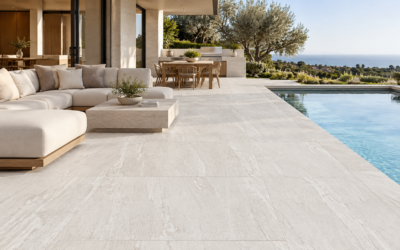
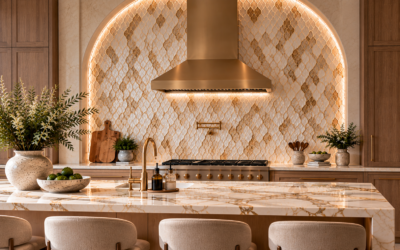
Finding the balance between timeless beauty and modern performance.
When it comes to designing a dream kitchen, bathroom, or living space, few decisions have as much long-term impact as the surfaces you choose; tile and stone not only set the visual tone of a room, but they also influence its overall atmosphere, as well as its durability, maintenance, and even resale value. Two of the most sought-after options—porcelain tile and natural stone—offer very different advantages. Understanding their strengths and trade-offs will help you make the right choice for your lifestyle and design vision.
The Case for Porcelain: Versatility Meets Performance
Porcelain tile has become one of the most popular materials in modern design for good reason. Engineered from refined clay and fired at extremely high temperatures, porcelain delivers exceptional density and strength. This makes it highly resistant to scratches, stains, and moisture—qualities that make it perfect for kitchens, bathrooms, and even outdoor applications.
Porcelain also shines in the aesthetics department. Thanks to digital printing technology, today’s porcelain can replicate nearly any material, from exotic marbles to rustic woods. Designers love the flexibility this provides, especially when they want a luxurious look without the maintenance challenges of natural stone.
“Porcelain is the chameleon of the design world—it adapts to almost any look while keeping maintenance stress-free.”
The Timeless Appeal of Natural Stone
While porcelain is engineered, natural stone offers something that simply can’t be manufactured: authenticity. Marble, granite, limestone, and travertine each carry unique veining, textures, and color variations formed by nature over thousands of years. No two slabs are alike, providing your project with a unique aesthetic that feels both elegant and enduring.
Natural stone also adds to the long-term value of a property. Homebuyers often see stone as a premium material, a detail that can elevate the overall perception of a home. Its tactile quality and depth create a sense of richness that porcelain can mimic but never fully duplicate.
Durability and Maintenance: Which Holds Up Better?
Porcelain has the advantage if durability is your top priority. It’s non-porous, so it won’t absorb water, and it resists staining far better than stone. It’s also virtually impervious to heat, frost, and UV rays, which makes it ideal for outdoor applications.
Natural stone, on the other hand, requires a bit more care. Because it’s porous, it often needs to be sealed to protect against spills and stains. Certain stones like marble are more prone to etching from acidic foods or cleaners. However, for those who love the lived-in character of materials that age gracefully, stone’s patina is part of its charm.
Style and Design Flexibility
Porcelain gives you more predictable design results. Whether you want the appearance of Calacatta marble, weathered oak, or sleek concrete, porcelain tiles can replicate those looks consistently across large areas. This uniformity can be especially helpful in modern, minimalist designs.
Natural stone, by contrast, offers unique variation. If you love the drama of bold veining, swirling patterns, or organic imperfections, stone delivers artistry that no tile pattern can match. Many designers use stone as a statement piece—for example, a striking marble waterfall island—while relying on porcelain for high-traffic or lower-maintenance areas.
“Designing a space isn’t just about beauty—it’s about creating a surface that supports the way you live every day.”
Cost Considerations
Porcelain generally comes at a lower price point than high-quality natural stone, both in material and installation. Stone can be more expensive due to quarrying, transportation, and the skill required for fabrication and installation. However, stone’s exclusivity and timeless appeal can justify the investment, especially in luxury projects.
Making the Right Choice for Your Space
Ultimately, the decision between porcelain and natural stone depends on your lifestyle and priorities:
-
Choose porcelain if you want durability, easy maintenance, and budget-friendly flexibility.
-
Choose natural stone if you value uniqueness and timeless luxury and don’t mind a little extra care.
For many homeowners and designers, the best approach is a blend—using stone as a focal point in one space and porcelain in another.
Final Thoughts
Both porcelain and natural stone have a place in modern interiors, and the right choice depends on how you live, what inspires you, and how much maintenance you’re willing to take on. If you’re still unsure, visiting a showroom to see these surfaces in person can make all the difference.
At Trendy Surfaces in Irvine and Laguna Niguel, you’ll find one of Southern California’s most curated selections of both porcelain and natural stone, along with expert guidance to help you choose the material that best fits your space.