Blog
How Patterned Tile Adds Personality to Kitchens and Bathrooms

From subtle geometry to bold color, patterned tile can turn practical surfaces into memorable design features that reflect the character of a home.
Kitchens and bathrooms are among the most functional rooms in a home, but they also offer some of the best opportunities to express personal style. Cabinetry, countertops, plumbing fixtures, and appliances often need to meet practical requirements, which can make the overall design feel predictable. Patterned tile offers a way to introduce creativity, movement, and visual identity without sacrificing durability or everyday usefulness.
A patterned backsplash can bring energy to a simple kitchen. A decorative bathroom floor can make a compact space feel intentionally designed. A geometric shower wall can provide an architectural focal point, while a softly patterned neutral tile can add depth without overwhelming the room. With so many colors, materials, formats, and motifs available, patterned tile can be adapted to nearly any interior style.
The key is to use patterns with purpose. Successful tile design is not simply about choosing the most eye-catching option. The scale of the room, surrounding materials, lighting, grout, layout, and amount of tile all influence the final result. When you consider these elements together, patterned tile can make kitchens and bathrooms feel more distinctive, polished, and personal.
Patterned Tile Creates a Strong Visual Identity
Every memorable interior has a perspective. It may feel relaxed and coastal, refined and traditional, warm and Mediterranean, clean and modern, or bold and eclectic. Patterned tile can help establish that identity because it introduces recognizable shapes, rhythms, and color relationships into the room.
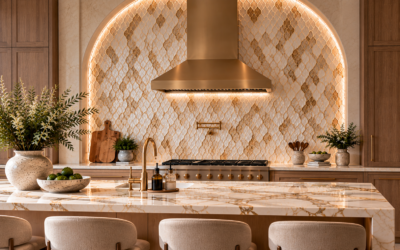
In a kitchen, tile often occupies a highly visible area between the cabinetry and countertops. This makes the backsplash a natural place to express personality. A simple kitchen with flat-panel cabinets and solid countertops can be transformed by a geometric backsplash. A traditional kitchen can feel more layered with a decorative ceramic pattern, while a coastal interior may benefit from soft blue, green, or sand-colored tile.
Bathrooms offer similar opportunities. Because many bathrooms contain relatively few decorative objects, the tile can carry much of the room’s visual character. A patterned floor can make a powder room feel dramatic and memorable. A decorative shower wall can become the focal point of a primary bathroom. Smaller patterns can be used inside niches, behind vanities, or around mirrors for a more restrained effect.
Patterned tile also allows homeowners to introduce colors that may be difficult to use elsewhere. A strong green, deep blue, warm terracotta, or rich charcoal might feel too dominant on every wall, but it can work beautifully within a coordinated tile pattern. The surrounding cabinetry, paint, and fixtures can remain neutral, allowing the tile to provide controlled color.
The pattern itself can communicate a particular mood. Symmetrical geometry tends to feel orderly and modern. Organic shapes create softness and movement. Traditional motifs can bring warmth and craftsmanship, while irregular handmade patterns may feel relaxed and individual.
“Patterned tile gives a room a visual signature, transforming an ordinary surface into something that feels intentionally designed.”
This sense of identity is especially valuable in renovations where homeowners want the kitchen or bathroom to feel different from every other space. The tile becomes a memorable feature that reflects their preferences rather than simply following a generic formula.
Kitchens Gain Character Through Patterned Backsplashes and Floors
The kitchen backsplash is one of the most popular locations for patterned tile because it combines visibility with a manageable installation area. It can make a significant design impact without requiring every surface in the room to be decorative.
A backsplash can be used to connect several materials. The pattern may repeat the color of the cabinetry, pick up an undertone from the countertop, or coordinate with hardware and light fixtures. For example, a black-and-white geometric tile can relate to dark cabinet pulls and pale countertops. A blue patterned tile might complement natural wood cabinets and brushed brass accents.
The scale of the pattern should relate to the size of the kitchen and the amount of backsplash area. Large motifs need enough uninterrupted surface so that you can fully appreciate them. In a kitchen with many outlets, windows, and cabinets, a smaller repeated pattern may create a more consistent appearance. A large pattern can work particularly well behind a range, where the wall area is often wider and less interrupted.
Homeowners can choose to install the pattern across the entire backsplash or use it as an accent. A full patterned backsplash creates a strong, unified statement. An accent panel behind the range can provide a focal point while quieter tile covers the remaining walls. Another option is to use patterned tile inside an open shelf area, beverage station, or pantry.
Patterned floor tile can also add character to a kitchen, particularly in Mediterranean, farmhouse, vintage-inspired, or eclectic interiors. It can define the cooking area in an open-concept layout and provide a decorative foundation beneath simpler cabinetry.
However, kitchen floors experience heavy traffic, spills, dropped objects, and frequent cleaning. Any patterned tile used on the floor should be rated for the application and selected with durability, slip resistance, and maintenance in mind. Porcelain is often a practical choice because it can reproduce decorative patterns while offering strong performance.
Pattern can also come from the installation layout rather than from the surface design of the tile. A solid-color rectangular tile arranged in herringbone, chevron, basketweave, or a vertical stack can create a decorative effect. This approach may appeal to homeowners who prefer a quieter color palette but still want visual movement.
Grout plays an important role. Contrasting grout emphasizes each tile and makes the pattern feel sharper. Matching grout softens the effect and allows the design to read as a more continuous surface. The right choice depends on whether the homeowner wants the tile geometry to stand out or blend together.
Bathrooms Become More Expressive With Decorative Tile Features
Bathrooms are naturally suited to tile because they require durable, moisture-resistant surfaces. Patterned tile allows those practical surfaces to contribute more meaningfully to the room’s design.
One of the most effective approaches is to create a focal wall. This may be the back wall of a shower, the wall behind a freestanding bathtub, or the area behind a vanity. A patterned feature wall draws attention to an important architectural element and provides the room with a clear visual center.
A shower offers several opportunities for patterns. Decorative tile can cover one wall, appear in a horizontal band, line a niche, or create a border around a larger field of neutral tile. Using a pattern in a limited area can make the detail feel special without visually crowding the enclosure.
Bathroom floors are another strong option, especially in powder rooms and guest bathrooms. A bold floor pattern can make a small space feel more complete because the limited square footage prevents the design from becoming overly repetitive. Pairing a patterned floor with simple wall tile and restrained fixtures helps maintain balance.
Mosaic patterns can work well on shower floors because their smaller format can follow the slope toward the drain and provide additional grout lines for traction. Hexagons, penny rounds, basketweave, and geometric mosaics can introduce patterns while remaining practical.
Homeowners should also consider how the tile will look when reflected in mirrors or shower glass. A strong pattern may appear more prominent when repeated visually across reflective surfaces. This can make the room feel more dynamic, but it can also increase visual intensity.
Color temperature matters as well. Cool blue, gray, and green patterns can create a fresh, spa-like feeling. Warm cream, terracotta, taupe, and sand tones can make the bathroom feel more relaxed and inviting. Black-and-white patterns often create crisp contrast and can work in both traditional and contemporary settings.
Lighting affects the appearance of patterned tile throughout the day. Glossy surfaces reflect light and may make colors appear brighter. Matte tile creates a softer effect, while textured tile can produce subtle shadows. Samples should be viewed under the room’s actual lighting before a final decision is made.
“A successful bathroom pattern creates interest where the eye naturally lands, then allows the surrounding surfaces to remain calm.”
This balance helps patterned tile feel sophisticated rather than excessive.
Balance Is Essential When Combining Pattern With Other Materials
Patterned tile naturally attracts attention, so the surrounding materials should support it rather than compete with it. A room can contain several interesting finishes, but there should be a clear hierarchy.
Cabinetry is often the largest visual element in a kitchen or bathroom. If the cabinets have strong wood grain, decorative door profiles, or a bold color, the tile pattern may need to be simpler. Flat-panel cabinets and solid finishes can support a more detailed tile design.
Countertops also influence the choice. A stone slab with dramatic veining already functions as a pattern. Pairing it with highly detailed tile can create visual competition. In this situation, homeowners might select a geometric tile in a limited color palette or choose a pattern with softer contrast. Conversely, a quiet solid countertop can provide the ideal background for a more expressive backsplash.
Fixtures and hardware should be considered as part of the composition. Black, brass, chrome, bronze, and nickel finishes can emphasize different colors within the tile. Repeating one of the pattern’s tones through hardware or accessories can help the room feel cohesive.
Wall color is another useful balancing tool. A paint color drawn from the lightest or softest shade in the tile can make the pattern feel integrated. Neutral walls allow the tile to remain the focus, while colored walls can create a more layered look when the tones are carefully coordinated.
Homeowners should also limit the number of competing patterns in a single room. Patterned tile, heavily veined countertops, decorative wallpaper, strong flooring, and elaborate textiles may be difficult to combine successfully. This does not mean every other surface must be plain, but one element should clearly lead.
Scale can help multiple patterns coexist. A large, open tile pattern may work with a smaller, subtle countertop movement. Two patterns of similar scale and contrast are more likely to compete.
The overall amount of pattern is as important as the design itself. A bold tile used across a small backsplash may feel balanced, while the same tile covering multiple walls could become overwhelming. Evaluating the total surface area helps determine the appropriate level of intensity.
Creating a material board with tile, countertop, cabinet, paint, metal, and flooring samples can make these relationships easier to assess. When you see all the finishes together, you often notice undertones or pattern conflicts that are difficult to see when you select products separately.
Modern Patterned Tile Can Feel Timeless
Some homeowners hesitate to choose patterned tile because they worry it will appear dated. While certain motifs may be closely associated with particular trends, patterned tile can have lasting appeal when it relates to the architecture, color palette, and overall character of the home.
Timeless patterns often have strong historical or geometric foundations. Checkerboard, hexagon, basketweave, herringbone, encaustic-inspired motifs, and simple repeating geometry have appeared in interiors for generations. Their continued use demonstrates that the pattern itself is not inherently trendy.
Color selection can make a substantial difference. A pattern in black, white, cream, gray, taupe, muted green, or soft blue may be easier to adapt over time than one built around several highly saturated colors. This does not mean bold color should be avoided, but homeowners should choose shades they genuinely enjoy rather than selecting them solely because they are currently popular.
Material quality also influences longevity. A well-made porcelain, ceramic, stone, or cement-look tile with depth and variation generally feels more substantial than a surface that relies solely on a printed novelty design. Texture, finish, and craftsmanship can give the pattern a richer appearance.
The relationship between the pattern and the home’s style should also be considered. A classic black-and-white mosaic may suit an older home, while a large abstract geometric design may feel more natural in a contemporary property. Choosing a tile that belongs within the architecture helps it feel intentional for years.
Homeowners can reduce risk by using strong patterns in areas that are smaller and easier to update, such as a powder room floor or kitchen backsplash. More restrained patterns may be preferable for expansive surfaces that are expensive or difficult to replace.
Another approach is to create a pattern through layout. A solid tile installed in a herringbone or stacked arrangement can provide movement without relying on a printed design. This provides the surface character while maintaining a limited palette.
Ultimately, timelessness is not only about avoiding trends. It is about selecting materials that feel appropriate, well-crafted, and personally meaningful. A pattern that genuinely complements the home can remain appealing even as other design preferences evolve.
Practical Considerations Before Selecting Patterned Tile
Patterned tile must satisfy both design and technical requirements. Before making a selection, homeowners should confirm that the product is suitable for the intended location.
Floor tile must be rated for foot traffic and provide appropriate slip resistance. Shower tile must be compatible with wet-area installation. Backsplash tile should be able to tolerate cleaning, heat exposure, and kitchen splashes. Exterior tile must be approved for outdoor conditions and the local climate.
Pattern alignment should be discussed before installation. Some tiles form a larger design when multiple pieces are placed together. Others can be rotated to create several possible layouts. The installer should understand the intended arrangement before work begins.
Natural and handcrafted tiles may contain color, size, or surface variation. This variation can create beauty and depth, but it should be reviewed in advance. Opening several boxes and blending pieces during installation can help distribute the variation evenly.
Printed porcelain and ceramic patterns may also have multiple faces to prevent obvious repetition. Homeowners should review the collection to understand how the graphics vary and how frequently the same design may appear.
Ordering extra tile is particularly important with patterned products. Future repairs may be difficult if the pattern or color batch is no longer available. Extra material also gives the installer flexibility when making cuts and aligning the design.
Grout width can change the way the pattern reads. Narrow joints often create a more continuous look, while wider joints may emphasize each individual tile. The tile’s dimensions and manufacturer recommendations should guide the final spacing.
Maintenance should be considered honestly. Small mosaics and textured surfaces contain more areas where dirt or residue may collect. Light grout may show discoloration more readily, while very dark grout can reveal mineral deposits in wet areas. Choosing materials that align with the homeowner’s cleaning expectations will support long-term satisfaction.
Professional installation is especially important for decorative patterns because layout errors are highly visible. Careful planning should account for focal points, centerlines, corners, outlets, plumbing fixtures, and edge cuts. A skilled installer can determine where to begin the layout so the pattern appears balanced and complete.
Frequently Asked Questions About Patterned Tile
Can patterned tile work in a small kitchen or bathroom?
Yes. Patterned tile can make a small room feel more intentional and distinctive. A powder room floor, compact backsplash, shower niche, or vanity wall can be an ideal location because the limited area keeps the pattern controlled.
Should patterned tile be used on the floor or walls?
It can be used on either surface, provided the tile is rated for the application. Floor patterns create a decorative foundation, while wall patterns draw the eye upward and can highlight architectural features.
What countertops work best with patterned tile?
Solid or subtly textured countertops are often the easiest to coordinate with strong patterns. Dramatically veined stone can also work, but the colors and scale should be carefully balanced to prevent visual competition.
Is patterned porcelain tile durable?
Porcelain tile can be highly durable when it is selected for the correct application and professionally installed. Product ratings should still be reviewed for floor use, wet areas, slip resistance, and exterior exposure.
How do I choose grout for patterned tile?
Matching grout creates a softer, more continuous appearance. Contrasting grout highlights the shape and individual pieces. Test samples whenever possible because grout can significantly change the overall effect.
Can I mix different patterned tiles in one room?
Yes, but it requires careful coordination. The patterns should vary in scale, share related colors, and have a clear visual hierarchy. In most rooms, one dominant pattern and one subtle supporting pattern are easier to balance.
Find Patterned Tile That Reflects Your Style at Trendy Surfaces
Patterned tile can transform a kitchen or bathroom from a purely functional room into a space with personality, movement, and visual depth. Whether the design is subtle and neutral or colorful and expressive, the right pattern can define a backsplash, highlight a shower, energize a floor, or turn a small powder room into a memorable feature.
The most successful results come from balancing creativity with careful planning. Before installation, consider pattern scale, surrounding materials, lighting, grout, layout, maintenance, and technical performance. With the right combination, patterned tile can feel both distinctive and enduring.
Trendy Surfaces helps homeowners, designers, contractors, and renovation professionals explore patterned tile for kitchens, bathrooms, backsplashes, showers, floors, and decorative features. From contemporary geometry and timeless mosaics to richly detailed ceramic and porcelain collections, Trendy Surfaces can help you find a design that complements your home and reflects your individual style.
Visit Trendy Surfaces to discover patterned tile options and create a kitchen or bathroom that feels unmistakably yours.