Blog
How Decorative Tile Can Transform a Modern Interior

Thoughtfully selected decorative tile can add texture, personality, visual structure, and lasting style to nearly any room in the home.
Modern interior design is often associated with clean lines, open spaces, neutral colors, and uncluttered surfaces. While these qualities create a calm and sophisticated environment, they can also leave a home feeling somewhat incomplete when every surface looks too uniform. Decorative tile offers a practical way to introduce depth and character without compromising the clean aesthetic that makes modern interiors so appealing.
Today’s decorative tile is available in an extraordinary range of colors, patterns, finishes, shapes, and materials. Homeowners can choose subtle textured porcelain for a quiet architectural effect, geometric tile for a bold focal point, handcrafted ceramic tile for organic variation, or elegant stone mosaics for a refined finish. These materials can transform a kitchen backsplash, define a shower wall, enhance an entryway, or add visual interest to a fireplace surround.
Unlike temporary décor, tile becomes part of the architecture of a room. It creates a lasting design feature that can influence how the entire space feels. When decorative tile is selected with the room’s proportions, lighting, furnishings, and overall style in mind, it can make a modern interior feel more intentional, polished, and personal.
Decorative Tile Introduces Character Without Creating Clutter
One of the central goals of modern interior design is to create visual clarity. Rooms often feature simple furniture silhouettes, limited color palettes, streamlined cabinetry, and carefully organized layouts. Decorative tile works particularly well in these environments because it adds visual interest directly to a functional surface rather than introducing additional objects or accessories.
A patterned backsplash, for example, can become the artistic element in a minimalist kitchen. Instead of filling countertops with décor, homeowners can allow the tile itself to provide color, pattern, or texture. In a bathroom, a sculptural wall tile can create movement and dimension while maintaining a clean, uncluttered layout. This makes tile especially valuable in smaller homes or contemporary spaces where every design choice needs to serve a purpose.
Decorative tile can be bold, but it does not need to dominate a room. A restrained pattern in a tone-on-tone palette can create sophistication without overwhelming the surrounding finishes. Soft gray geometric tile, ivory fluted tile, or matte white tile with a raised surface can add depth while preserving a neutral, modern atmosphere.
The level of visual impact depends on several factors, including the scale of the pattern, the contrast between colors, the tile’s finish, and the size of the installation. A high-contrast pattern covering an entire wall will naturally attract more attention than a subtle textured tile used in a small niche. Homeowners can therefore control exactly how much personality decorative tile contributes to the room.
“Decorative tile allows a modern space to feel expressive without relying on unnecessary furniture, artwork, or accessories.”
This combination of function and visual interest is one reason tile remains such a powerful material in contemporary interiors. It transforms walls, floors, and architectural details into design features while supporting the practical needs of everyday living.
Pattern, Shape, and Texture Can Reshape the Visual Experience
Decorative tile can influence more than the style of a room. It can also affect how people perceive the room’s proportions, movement, and architectural features. Tile shape, layout, pattern direction, and grout placement all contribute to the visual experience of a space.
Vertical tile installations can make a wall appear taller, which can be useful in compact bathrooms or rooms with lower ceilings. Long horizontal tiles can visually widen a kitchen backsplash or shower wall. Diagonal patterns introduce movement, while stacked tile arrangements create a more structured and contemporary appearance. Herringbone, chevron, basketweave, and geometric layouts can bring rhythm to surfaces that might otherwise feel flat.
Shape also plays an important role. Traditional rectangular subway tile remains popular, but modern interiors increasingly incorporate hexagons, elongated rectangles, diamonds, scallops, arches, and irregular handcrafted forms. These shapes can create a distinctive design statement even when the color palette remains simple.
Texture adds another layer of interest. Three-dimensional tile can interact with natural and artificial light, creating highlights and shadows throughout the day. Fluted, rippled, carved, or dimensional surfaces often appear different depending on the viewing angle. This makes the material feel dynamic without requiring multiple colors or elaborate patterns.
Glossy tile reflects light and can help a room feel brighter, while matte tile creates a softer, more understated effect. Metallic, glass, and polished stone accents can contribute a sense of luxury, while handmade ceramic tile introduces subtle imperfections that make a space feel warmer and more individual.
Homeowners should consider how these characteristics will work with the room’s existing conditions. A highly textured tile may be especially effective on a wall illuminated by natural light or directional fixtures. A reflective surface may help brighten a kitchen with limited daylight. A strong geometric pattern may be most successful when paired with simple cabinetry and restrained furnishings.
Decorative tile is therefore not merely a finishing material. It can be used as a visual tool to emphasize height, create movement, balance proportions, and draw attention to selected architectural areas.
Modern Kitchens and Bathrooms Benefit From Strategic Tile Features
Kitchens and bathrooms are among the most common places to use decorative tile because these rooms require surfaces that can withstand moisture, cleaning, heat, and daily wear. However, tile in these spaces does not need to be selected purely for practical reasons. It can also establish the design direction for the entire room.
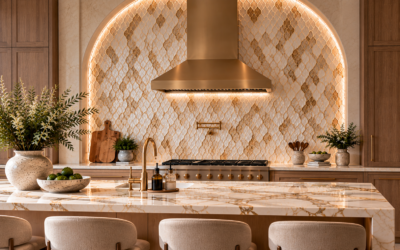
In a modern kitchen, the backsplash is an ideal location for decorative tile. It occupies a highly visible area between the countertops and upper cabinetry, making it a natural focal point. A decorative backsplash can connect cabinet colors, countertop materials, flooring, hardware, and lighting into a cohesive design.
For kitchens with white or wood cabinetry, patterned tile can introduce contrast and personality. In darker kitchens, lighter reflective tile can prevent the room from feeling too heavy. Homeowners who prefer a subtle aesthetic may select a neutral tile with an engaging surface or layout rather than a strong color.
Decorative tile can also be used behind a range, along an entire kitchen wall, around a beverage station, or on the front of an island. Extending tile beyond the traditional backsplash area can make the material feel more architectural and intentional.
Bathrooms offer even more opportunities. Decorative tile can define a shower wall, frame a bathtub, highlight a vanity, line a niche, or create a border within a larger field of neutral tile. A mosaic floor can add detail without competing with the walls, while a patterned wall can become the room’s primary design feature.
The most successful modern bathrooms often balance decorative tile with quieter surrounding materials. For example, a bold shower wall may be paired with large-format neutral floor tile and simple cabinetry. A detailed mosaic floor might work best with solid wall surfaces. This contrast allows the decorative element to remain visually clear rather than becoming lost among too many competing patterns.
Practical maintenance should also be considered. Intricate mosaics include more grout lines, while highly textured surfaces may require additional cleaning. Porcelain decorative tile can be an excellent option for wet areas because it is durable and available in a wide variety of finishes. Ceramic, glass, and natural stone may also be appropriate depending on the location and installation requirements.
“The strongest tile designs create a clear focal point, then give the eye enough quiet space to appreciate it.”
By using decorative tile strategically rather than randomly, homeowners can create kitchens and bathrooms that feel stylish, balanced, and highly functional.
Tile Can Connect Different Areas of an Open-Concept Home
Open-concept interiors have changed the way homeowners approach materials. Kitchens, dining rooms, and living spaces may now share one continuous visual environment, which means each finish must relate to the others. Decorative tile can help define individual areas while maintaining a cohesive overall design.
A kitchen backsplash can establish a visual identity for the cooking area without requiring walls or partitions. Tile used on a fireplace surround can anchor the living room and create a focal point visible from several areas. A tiled entryway can signal a transition from the exterior into the main living space while protecting the floor from moisture and dirt.
The key is to select tile that complements the broader palette of the home. Decorative tile does not need to match every material exactly, but it should share certain visual characteristics. A backsplash might repeat the warm undertones of wood flooring, echo the shape of nearby lighting fixtures, or connect with the color of upholstery in the living area.
Repeating tile elements can also create continuity. The same material might appear in different formats throughout the home, such as a large-format tile on the floor and a smaller mosaic version in the bathroom. A color introduced in the kitchen backsplash could reappear in a fireplace surround or powder room accent wall.
At the same time, decorative tile can be used to distinguish one area from another. In an open layout with limited architectural separation, a strong tile feature can create a sense of place. It helps the kitchen, dining area, entry, or living room feel visually defined while remaining connected to the rest of the interior.
This balance between continuity and distinction is particularly important in modern homes. Too much repetition can make every room feel identical, while too many unrelated materials can create visual disorder. Decorative tile provides an opportunity to introduce variety within a carefully controlled design language.
Choosing Decorative Tile That Will Continue to Feel Current
Decorative tile is a long-term design decision, so homeowners often worry about selecting a pattern or color that may quickly appear outdated. While no material is entirely immune to changing trends, thoughtful choices can help tile remain attractive for many years.
The first step is to consider the architectural style of the home rather than selecting tile solely because it is currently popular. A geometric porcelain tile may complement a contemporary property, while a handcrafted ceramic tile may suit a modern Mediterranean or transitional interior. Natural stone mosaics can work beautifully in luxury spaces where organic materials are already part of the design.
Color also influences longevity. Neutral palettes tend to provide greater flexibility, but neutral does not have to mean plain. Beige, charcoal, cream, taupe, soft green, muted blue, and warm gray can all create depth while remaining adaptable. Homeowners who enjoy stronger colors may use them in smaller areas, such as a powder room, niche, or backsplash, where the installation feels intentional rather than overwhelming.
Scale is another important consideration. Minimal, highly detailed patterns can create visual energy, while larger patterns often feel more architectural. The right choice depends on the room size and the amount of surface you cover. A large pattern may require enough wall or floor area for you to fully appreciate it.
Grout color should also be part of the design decision. Contrasting grout emphasizes the tile’s shape and layout, while matching grout creates a more seamless appearance. A white hexagon tile with dark grout will have a dramatically different visual effect from the same tile installed with white grout.
Samples are essential. Tile can look different under showroom lighting than it does in a home. Homeowners should observe samples near cabinetry, countertops, flooring, paint, and natural light before making a final selection. When you view materials together, you can better understand texture, reflectivity, color variation, and grout relationships.
Professional guidance can be valuable because decorative tile involves both aesthetic and technical considerations. Tile size, substrate preparation, water exposure, slip resistance, layout, edge finishing, and installation methods can all affect the final result. A beautiful tile will only achieve its full potential when it is appropriate for the location and installed correctly.
Frequently Asked Questions About Decorative Tile
Where should decorative tile be used in a modern home?
Decorative tile can be used on kitchen backsplashes, bathroom walls, shower floors, fireplace surrounds, entryways, laundry rooms, bar areas, accent walls, stair risers, and other architectural features. The best location depends on the room’s function and the desired level of visual impact.
Can decorative tile work in a small room?
Yes. Decorative tile can make a small room feel more intentional and distinctive. Smaller spaces, such as powder rooms, are often ideal for experimenting with pattern or color. However, the scale of the tile should be considered carefully to avoid making the room feel visually crowded.
Is patterned tile difficult to maintain?
Maintenance depends on the tile material, finish, grout, and installation location. Porcelain and ceramic tile are generally easy to clean. Mosaics and textured tiles may require more attention because they contain additional grout lines or surface variation.
Should decorative tile match the countertops and cabinets?
It does not need to match exactly, but the materials should coordinate. The tile may repeat an undertone, introduce a complementary contrast, or connect with hardware and flooring. Viewing all materials together before installation helps create a cohesive result.
How much decorative tile is too much in a room?
There is no universal rule, but most rooms benefit from a clear hierarchy. You can balance one primary decorative feature with simpler supporting surfaces. Using multiple strong patterns in the same room can work, but it requires careful attention to scale, color, and visual balance.
Transform Your Interior With Tile From Trendy Surfaces
Decorative tile can make a modern interior feel more layered, personal, and complete. Whether you use it as a subtle textured backdrop or a striking patterned focal point, tile brings architecture, color, and craftsmanship into everyday spaces. The right selection can enhance the room’s proportions, complement surrounding materials, and create a feature that continues to add value for years.
Trendy Surfaces helps homeowners, designers, and renovation professionals explore tile options that combine lasting performance with distinctive design. From contemporary porcelain and elegant mosaics to decorative ceramic styles and statement patterns, the right surface can transform an ordinary room into a thoughtfully designed interior.
Visit Trendy Surfaces to discover decorative tile ideas and find materials that bring your modern interior vision to life.